Decoration Methods
Screen printing vs DTG vs embroidery: the garment picks the method.
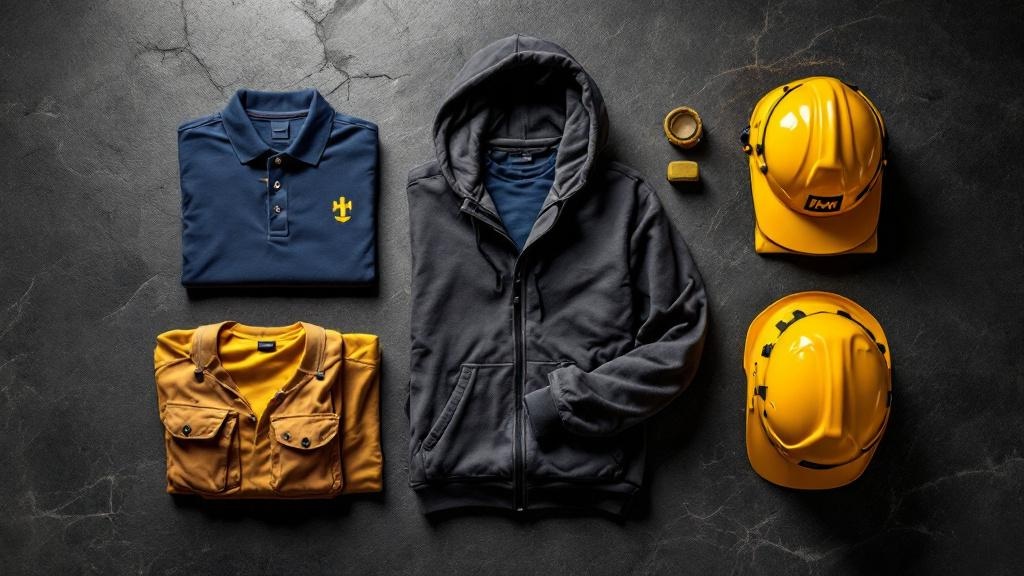
Screen print bulk tees, hoodies, and hi-vis with one to a few colors. Use DTG or DTF for small runs and full-color or photo artwork, DTG on cotton and DTF on almost anything. Embroider polos, button-downs, caps, and jackets, where a stitched logo lasts the life of the garment and reads as a uniform. Sublimate all-over designs on light polyester. Most Las Vegas programs use two or three of these, decided garment by garment on one proof standard.
Five Methods
What each one is for, and where it stops.
| Method | Best For | Limits | Durability |
|---|---|---|---|
| Screen printing | Bulk tees, hoodies, hi-vis; one to a few ink colors | Setup per color; not economical under about a dozen pieces; fine detail and photos are hard | Excellent with plastisol; very good with water-based |
| DTG (direct to garment) | Small runs of full-color or photo artwork on cotton tees | Cotton-rich fabrics only; higher per-piece cost at volume; softer than screen print on darks | Good; fades sooner than screen print with heavy washing |
| DTF (direct to film) | Small to mid runs, full color, mixed garment types, polyester and blends | A transfer with a hand feel on large solid areas; not for FR without manufacturer approval | Very good when applied correctly |
| Embroidery | Polos, button-downs, caps, jackets, uniforms | Stitch count drives cost; small text and gradients do not translate; heavy on thin tees | Lasts the life of the garment |
| Sublimation | All-over prints on white or light polyester: jerseys, performance polos | Polyester only; no dark garments; no cotton | Permanent; the ink is in the fiber |
The Buyer's Read
Three questions that choose the method every time.
What is the garment? Knit polos, twill work shirts, caps, and jackets want embroidery; the fabric carries the stitches and the result survives industrial laundering. Cotton and blend tees and hoodies want print. Light polyester performance wear can be sublimated edge to edge. Flame-resistant and hi-vis garments want whatever the manufacturer permits and nothing else; the NFPA 70E guide and the ANSI 107 guide explain the boundaries.
How many, and how many colors? Two dozen or more shirts with one to three ink colors is screen printing territory; the setup is spread across the run and the per-piece cost is the lowest of any method. Under a dozen, or with photo-style artwork, DTF or DTG avoids the screen setup entirely. The DTF vs screen printing guide works through examples, and the ink guide covers feel and durability on darks.
What does the logo look like? Solid shapes and clean text embroider well; gradients, photos, and tiny type do not, and a logo built for a website often needs a simplified embroidery version. The logo file setup guide explains what to send. Full-color, photographic, or many-color artwork points to DTG or DTF; a bold one- or two-color mark points to screen print.
Answer those three and the method is usually obvious, and it is usually more than one. A typical Las Vegas crew program screen prints the tees and hi-vis, embroiders the polos and caps, and DTFs the short event run, all from one artwork file and one proof standard. For the construction-specific version of this decision, see screen printing vs embroidery for construction gear; for the DIY question, see professional shop vs heat press.
What Clients Say
Five stars from the teams we outfit.
Verbatim from client reviews. Crews, schools, and companies that order from us again.
“One of the most reliable and honest vendors we've worked with. Incredibly responsive, communicates clearly, and always makes sure every detail is double-checked before moving forward. We've thrown him some last-minute requests and he's always handled them with patience, transparency, and realistic timelines.”
“I've worked with them for over 14 years for all my event promotional needs. From branded apparel to unique giveaways, their products are always high-quality and delivered on time. The embroidery work is especially impressive: clean, detailed, and consistent every time.”
“We've been working with them for years for our company uniforms and branded swag, and they've consistently delivered. The products are top quality and competitively priced.”
“The order was placed and ready earlier than the date we had discussed. The shipment came right away and everyone loves the shirts.”
FAQ
Method questions, answered.
What is the difference between screen printing, DTG, and embroidery?
Screen printing pushes ink through a stencil onto the garment, one screen per color, and is the bulk method. DTG prints ink directly into cotton like a photo printer and suits small full-color runs. Embroidery stitches the design in thread and is the uniform method for polos, caps, and jackets. DTF transfers a printed film with heat and covers the small-run, mixed-fabric gap between them.
Which is most durable?
Embroidery lasts the life of the garment. Screen printing with plastisol ink is next and holds up through years of washing. DTF is very good when applied correctly. DTG is good but fades sooner under heavy commercial laundering. Sublimation is permanent but only exists on polyester.
How long does screen printing last?
A properly cured plastisol screen print usually holds up through years of regular washing, often as long as the shirt itself. Water-based prints feel softer and can fade a little sooner. Washing inside out in cold water and skipping high dryer heat extends either one.
How long does DTG printing last?
DTG holds up well to normal home washing but fades sooner than screen print under heavy or commercial laundering. That makes it a better fit for event and small-run shirts than for crew tees washed every day, where screen print or embroidery lasts longer.
Which is cheapest?
At quantity, screen printing has the lowest cost per piece for simple artwork because setup is spread across the run. Under a dozen pieces, DTF or DTG is cheaper because there is no screen setup. Embroidery is priced by stitch count, so a small chest logo is affordable at any quantity while a large back design is not.
Should a company polo be printed or embroidered?
Embroidered. A knit polo takes embroidery cleanly, the logo survives industrial laundering, and it reads as a uniform. Screen print a polo only for large multi-color artwork on a big run where embroidery stitch count would be prohibitive.
Can you print photos or full-color logos?
Yes, with DTG on cotton or DTF on most fabrics. Screen printing can simulate full color with process or simulated-process printing at volume. Embroidery cannot reproduce gradients or photos; the logo is simplified to solid shapes.
Which method for hi-vis or FR garments?
Whatever the garment manufacturer allows, and nothing else. ANSI hi-vis and NFPA-rated FR garments have decoration guidance that Bighorn confirms before quoting. See the ANSI 107 and NFPA 70E guides.
Do I have to choose one method for the whole program?
No, and most programs mix: screen print the tees and hi-vis, embroider the polos and caps, DTF the small event run. One artwork file, one proof standard, several methods by garment.
Where can I get screen printing, DTG, or embroidery in Las Vegas?
Bighorn Threads coordinates all of these through vetted Las Vegas production partners with local account management and written quotes. Send the artwork, garment, and quantity and the quote names the method and why.
Not sure which method? Send the artwork.
The quote names the method for each garment and why.