Decoration Methods
DTF Printing vs Screen Printing for Custom Apparel: When to Use Which
A working buyer's guide to DTF (direct-to-film) printing — when it wins on small-batch and dark fabrics, and when to switch back to screen printing for volume runs.
Bighorn Threads Team8 min read
How DTF Printing Works
- Design printed on transfer film using specialized DTF inks (CMYK + white) on a DTF-equipped printer.
- Hot-melt adhesive powder applied to the back of the printed film while the ink is still wet.
- Powder is cured under the transfer-system manufacturer's current specification.
- The film is heat-pressed onto the garment using the documented time, temperature, and pressure.
- The transfer is finished under the current film and equipment instructions.
When DTF Wins Over Screen Printing
- Small-batch orders. DTF may offer suitable setup economics. Compare current written quotes.
- Full-color photographic designs. DTF handles gradients and photographic detail natively. Screen printing requires elaborate halftone separation.
- Dark fabric colors. DTF prints with white-ink underlayers that saturate on black/navy/dark gray. Screen printing requires extra underbase steps that add cost and time.
- Mixed-fabric orders. DTF may support several materials, but the partner must confirm every garment and transfer system.
- Replacement runs. DTF may fit a smaller reorder. Compare the available method, minimum, setup, and price.
When Screen Printing Wins Over DTF
- Larger runs. Screen printing may offer better unit economics. Compare both quotes on the same specification.
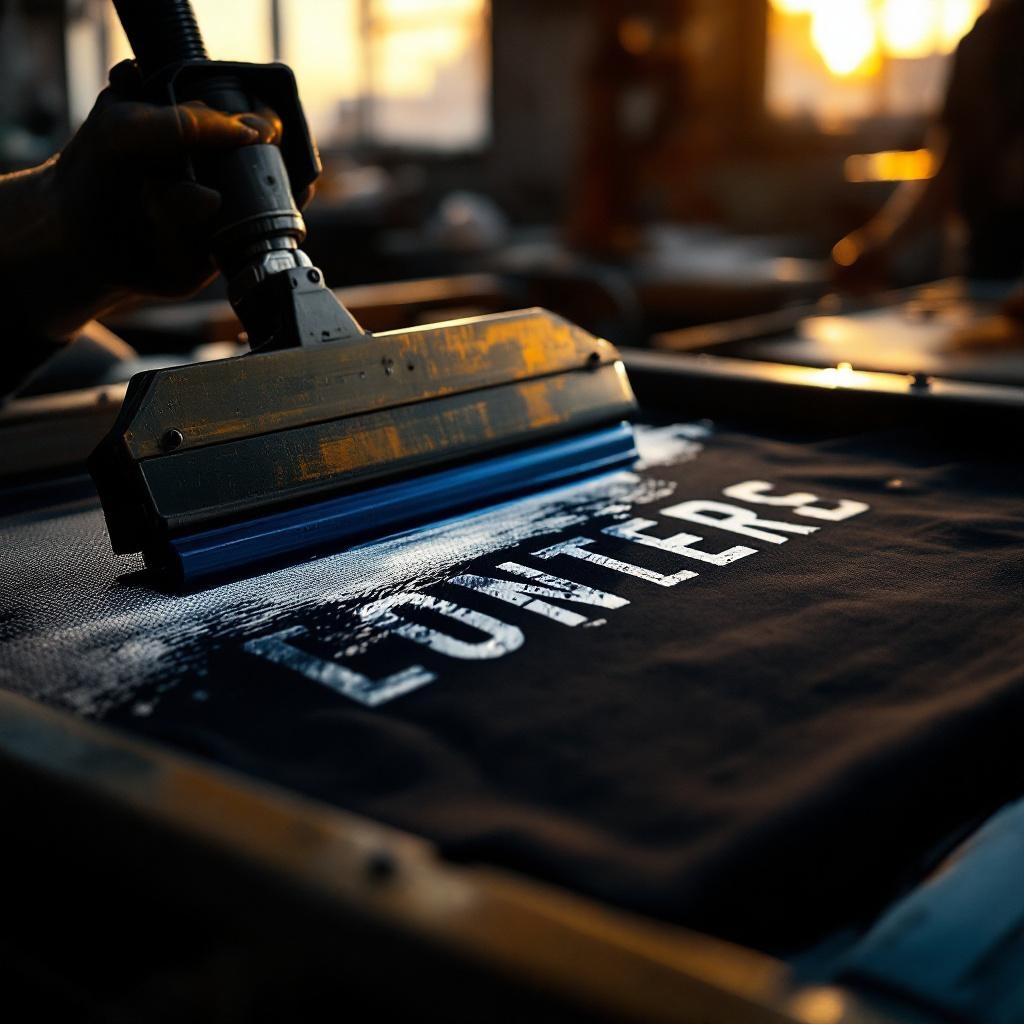
- Bold simple designs on cotton tees. Block letters, bold logos, simple shapes — screen printing handles these at scale better than DTF.
- Durability-sensitive programs. Request product-specific testing, care instructions, and partner documentation for either method.
- Surface feel. Ink and transfer feel depend on the selected product, process, materials, and production specification. Confirm the approved sample before ordering.
- High-visibility safety apparel. The employer and manufacturer must approve the exact garment, method, materials, and placement.
Cost Comparison Across Quantities
The crossover depends on garment cost, artwork, colors, placements, setup, quantity, and current partner pricing:
| Quantity | DTF | Screen Printing | Winner |
|---|---|---|---|
| Small batch | Quote required | Quote required | Compare both |
| Medium batch | Quote required | Quote required | Compare both |
| Large batch | Quote required | Quote required | Compare both |
For Vegas Trade Crews
For a trade crew program, screen printing and DTF may support different parts of the specification. Compare options for:
- Replacement runs after garments are damaged
- Specialty one-off shirts for new hires before a full reorder
- Project-specific tees for ribbon cuttings or trade-show booths
- Full-color graphics on dark crew tees where screen printing underbase would balloon cost
For broader pricing context see minimum order quantity for embroidery and screen printing.
Related Reading
Custom apparel decoration in Las Vegas
Bighorn Threads coordinates decoration through selected production partners for Vegas trade contractors. DTF, screen printing, and embroidery availability depend on the product, artwork, quantity, and partner.
Get a Quote →