
Plastisol vs Water-Based Ink for Workwear: A Buyer Comparison
Compare two common ink families by garment, artwork, hand feel, opacity, care, curing, and intended use.
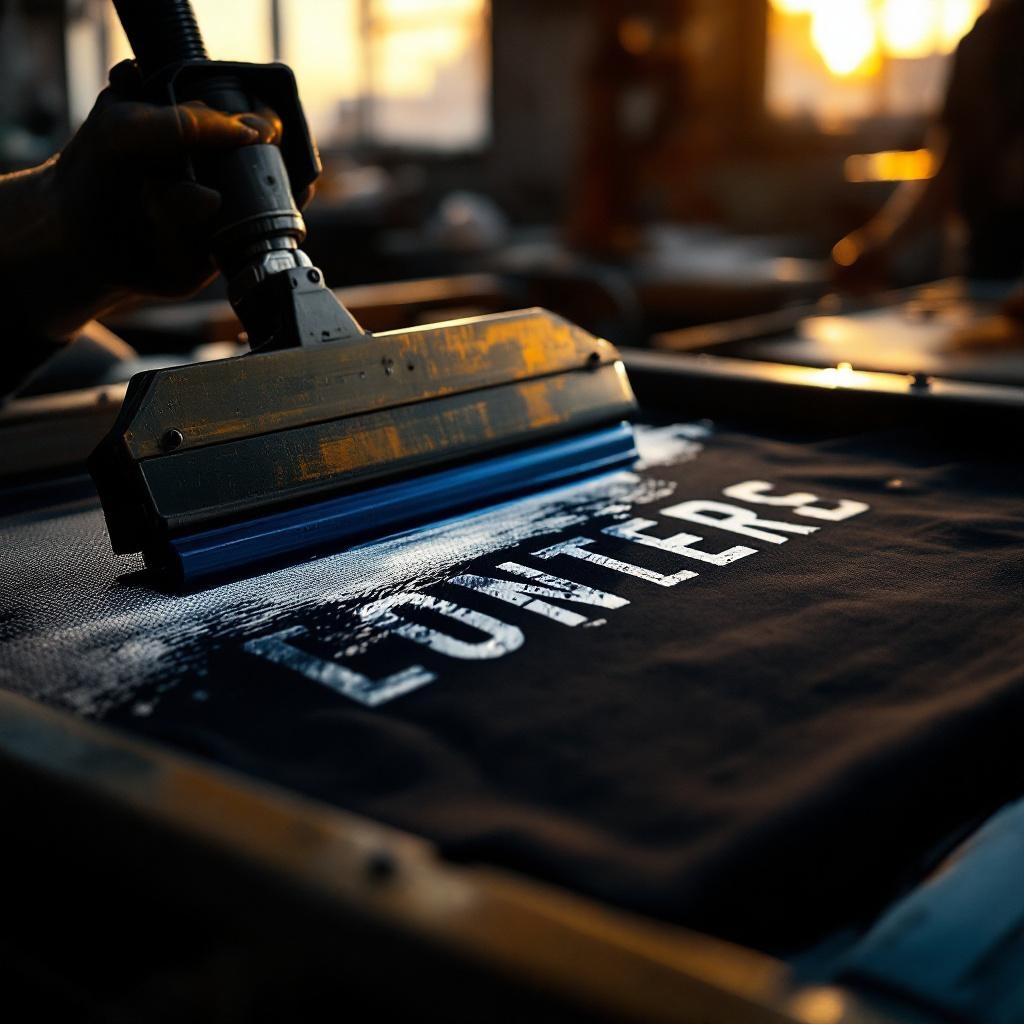
Buyers should ask which ink system and curing process a production partner proposes. Wear depends on the exact garment, ink, cure, artwork, use, storage, and laundering, so a universal month or wash-count claim is not reliable.
Here's the working contractor's breakdown of plastisol vs water-based ink — what each one is, where each one wins, and how to spec for your crews instead of getting whatever the shop defaults to.
1. How the Two Inks Actually Differ
Both inks are pushed through a screen and onto fabric the same way. The chemistry is what changes.
Plastisol
A PVC-based ink suspended in plasticizer. It doesn't dry — it cures. The ink sits on top of the fabric and locks when heated through a cure tunnel at 320°F. Once cured, it's essentially a flexible plastic film bonded to the shirt.
Water-based
Pigment + binder + water. The water evaporates during cure, leaving the pigment soaked into the fabric fibers themselves. It dyes the cotton instead of sitting on top of it.
That fundamental difference — sits on top vs sinks in — drives almost every pro and con of each method.
2. Where Plastisol May Fit Workwear
Plastisol is a common choice for construction work shirts. Here's why:
Opacity on dark fabric
Plastisol is fully opaque. A white logo on a navy tee looks white — bright, clean, no fabric showing through. Water-based on dark fabric requires a white underbase first, which adds steps and cost.
Color match precision
Color matching depends on the ink system, garment, artwork, proof, and production partner. Bighorn coordinates the approved color specification and written proof before production.
Wash durability
Properly cured plastisol can be durable, but results depend on the ink system, cure, garment, care, and laundry process. Confirm compatibility with the garment manufacturer and any commercial laundry provider. Protective apparel requires a separate employer and manufacturer review.
Bold graphics
Big back prints, full-front graphics, bold type — plastisol delivers them with crisp edges and consistent ink lay. The opacity and ink film make the design read from across a job site.
One common option
Plastisol is one common candidate for opaque graphics. The production partner should confirm the exact garment, ink system, cure, color target, and care before approval.
3. Where Water-Based Wins
Water-based is a different tool that may fit specific garments, artwork, and hand-feel goals:
Soft hand-feel
Water-based printing can create a softer hand on compatible garments. The result depends on the ink system, fabric, color, underbase, artwork, and cure, so review a sample or product-specific proof.
Vintage / faded look
Some water-based systems can support a softer or vintage-style result. Expected color and aging depend on the garment, ink, process, and care.
Hot conditions, breathability
A large surface print can change local hand feel and air movement. Compare print area, ink deposit, garment fabric, and a sample when comfort matters. Decoration does not replace an employer heat-illness plan.
Light fabric on light shirt
Water-based ink may suit some light-on-light or tonal designs. Final color and hand depend on the exact garment, ink system, artwork, and cure.
4. Behavior by Fabric: Cotton vs Poly
This is where ink choice gets technical. The two inks behave very differently on the two main shirt fabrics.
100% cotton
Both inks work, but water-based is at its best here. The cotton fibers absorb the pigment and lock it in. Plastisol works fine but doesn't have the soft-hand advantage.
100% polyester (hi-vis, performance)
Polyester can require ink and curing choices that control dye migration. The selected production partner must confirm a compatible process for the exact garment and artwork.
Cotton-poly blends (50/50, 60/40)
Blends require product-specific testing because fiber content, dyes, ink, additives, and cure affect the result. The production partner should recommend and document a compatible process.
5. The Vegas Heat Factor
Hot storage can affect some decorated products. Ask the production partner for ink-specific curing, packing, storage, and care guidance for the exact order.
Ink and curing requirements depend on the garment and ink system. The selected production partner must confirm its documented process for the exact order.
Water-based results also depend on the ink system, cure, garment, storage, and care. Ask for product-specific guidance when apparel may remain in a hot vehicle.
6. Decision Tree by Garment
Here's how we usually call it for crew apparel:
- Crew tees (cotton, daily wear) → plastisol if you want bold, water-based if you want premium
- Hi-vis polyester: employer selects the protective garment; manufacturer instructions and the production partner govern eligible decoration
- Cotton-poly blend tees: test for dye migration and confirm a compatible ink and cure
- Hoodies and crewnecks: compare ink systems by fabric, artwork, hand feel, opacity, and care
- Premium brand merch (giveaways, recruiting) → water-based for the soft-hand premium feel
- Polos: compare embroidery and other eligible methods for the exact product (see screen vs embroidery breakdown)
- Flame-resistant shirts: employer selection and current manufacturer decoration instructions control; do not assume an ink preserves protection
For more details, see our screen printing service page. Bighorn coordinates the selected ink and garment with a production partner. Available methods depend on the partner and product.
Want a recommendation on your specific gear?
Send the garment + your design. We'll tell you which ink fits and why.
Get a QuoteThe Short Version
Plastisol and water-based ink can each fit certain garments and artwork. Choose from the exact garment, ink system, proof, cure, use, care, and production-partner documentation. Protective apparel needs employer selection and manufacturer review.
Some shops specialize in one ink system. The right choice depends on the garment, artwork, and intended use. The production partner confirms available methods.
Bighorn Threads Team
Screen printing for Vegas trades today. See our full screen printing service.