
What Is Embroidery? A Buyer's Guide for Custom Apparel
A plain-English guide to commercial embroidery, how it works, where it may fit, and what makes a logo suitable for stitching.
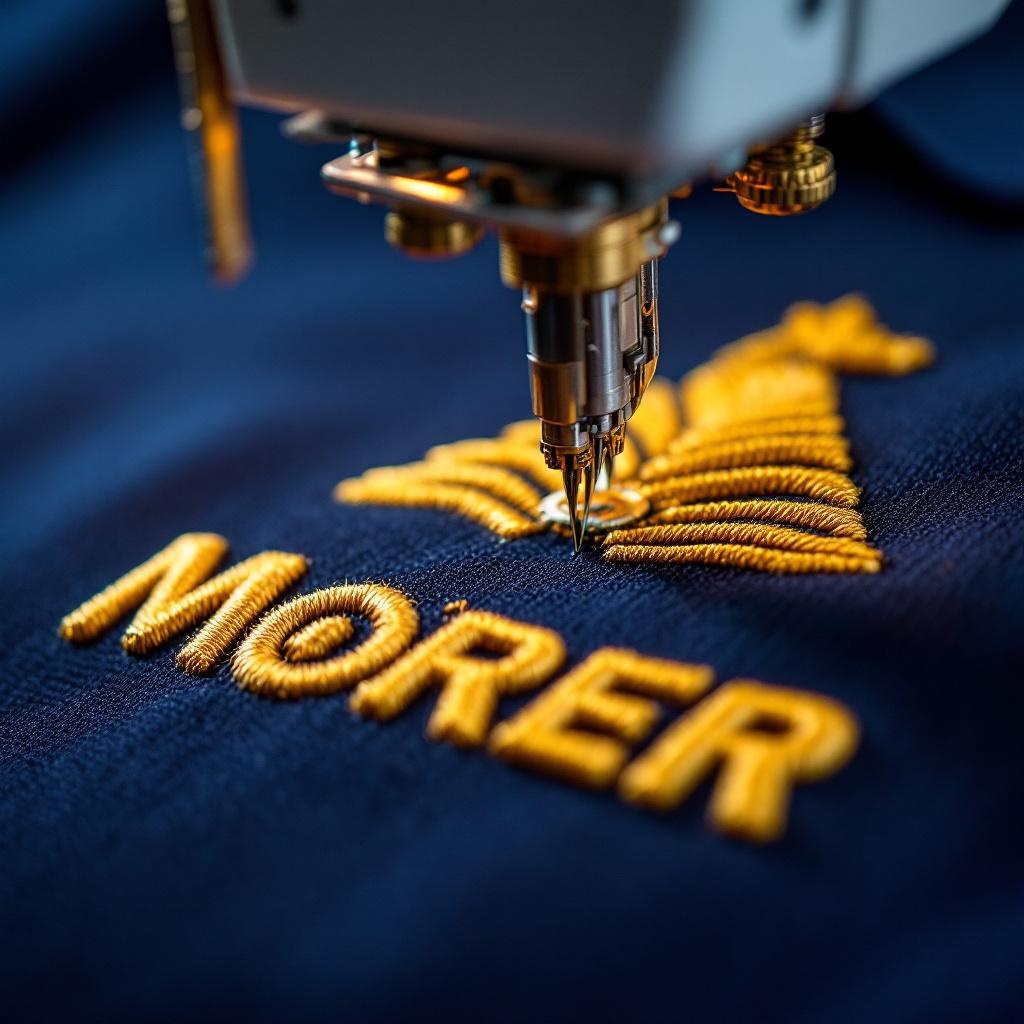
How Embroidery Works, Step by Step
- Digitize the logo. The original logo file (vector format ideally) is converted into a stitch file by an embroidery digitizer. The digitizer makes decisions about stitch direction, density, color order, and how detail elements translate. This is a one-time process per logo; the file is reused for every reorder.
- Hoop the garment. The garment is clamped into a hoop with stabilizer backing on the underside. The hoop holds the fabric taut so stitches sit flat without puckering.
- Load the stitch file. The stitch file is loaded into the embroidery machine via USB or network connection.
- Thread the machine. The needles are threaded with the thread colors needed for the design. A multi-needle machine has 6-15+ needles, each with its own color.
- Run the machine. The machine places the stitches from the approved file. Run time depends on stitch count, color changes, garment handling, machine, and production setup.
- Trim and inspect. After the design completes, jump-stitch threads (threads that connected one part of the design to another) are trimmed by hand and the finished garment is inspected for thread breaks or skipped stitches.
Multi-head machines can decorate several garments in one run. Actual throughput depends on the machine, design, garment, setup, trims, and inspection.
What Makes a Logo Embroider Well
Not every logo translates cleanly to embroidery. Five characteristics of designs that embroider well:
- Bold and distinct elements. Solid shapes and clear letterforms read crisply at chest-logo sizes.
- Reviewed fine detail. The digitizer confirms whether lines, text, and small elements need adjustment.
- Approved color plan. Thread colors and color changes depend on the artwork and production setup.
- Reviewed effects. Gradients, shadows, and transparencies may need a production-specific interpretation.
- Readable at the intended size. Approve the exact dimensions and treatment in the proof or sample.
For deeper background, see logo digitizing 101. The digitizing file is one important part of the result, along with the garment, thread, backing, size, and production settings.
When to Choose Embroidery Over Screen Printing
Embroidery may be worth comparing for:
- Polos, button-downs, jackets, and hats. Compare the desired texture and appearance on the exact product.
- Different quantities. Compare current setup, minimum, and unit pricing for the exact order.
- Selected fabrics. The production partner must confirm compatibility with the exact garment.
- Detailed artwork. Compare embroidery and other eligible methods against the exact artwork, size, and product.
- Protective apparel. The employer selects the garment, and current manufacturer instructions determine whether and how it may be decorated. Do not assume thread or embroidery preserves a protective rating.
For broader comparison see what is screen printing and screen printing vs embroidery.
What Drives Embroidery Cost
Five factors:
- Stitch count — drives most of the per-piece machine time
- Garment cost — the blank itself is a meaningful part of the total
- Digitizing fee — a one-time charge per logo
- Decoration complexity — multiple placements multiply machine operations
- Quantity — modest volume discount because machine time is fixed per piece
For full pricing context see how much it costs to embroider a shirt, or the polo-specific numbers in how much it costs to embroider a polo.
How Long Does Embroidery Last?
Embroidery wear depends on the garment, thread, stitch design, backing, production quality, use, abrasion, and laundering. It does not have the same surface-film failure mode as a print, but threads can still snag, abrade, discolor, or distort.
Dense stitching on stretchy or lightweight fabric can pucker or distort. Review a proof or sample and follow the product-specific care instructions.
Getting Started With Custom Embroidery
- Pick the garment. Select a product and ask the production partner to confirm embroidery compatibility.
- Send your logo. Vector format (.ai, .eps) is best.
- Specify quantity and placements. Request the current minimum, setup, and unit pricing in writing.
- Get a digital proof. A good shop will send you the digitized stitch file rendered before running the machine, so you approve the look before production.
Custom embroidery in Las Vegas
Bighorn Threads coordinates commercial embroidery for Vegas contractors, trade businesses, and service companies. Production partners handle embroidery and digitizing for each approved order.
See Our Embroidery Service →