
Screen Printing vs Embroidery: Which Is Right for Construction Gear?
Price isn't the question. Durability, garment type, and how your logo actually reads on a jobsite — that's the question.
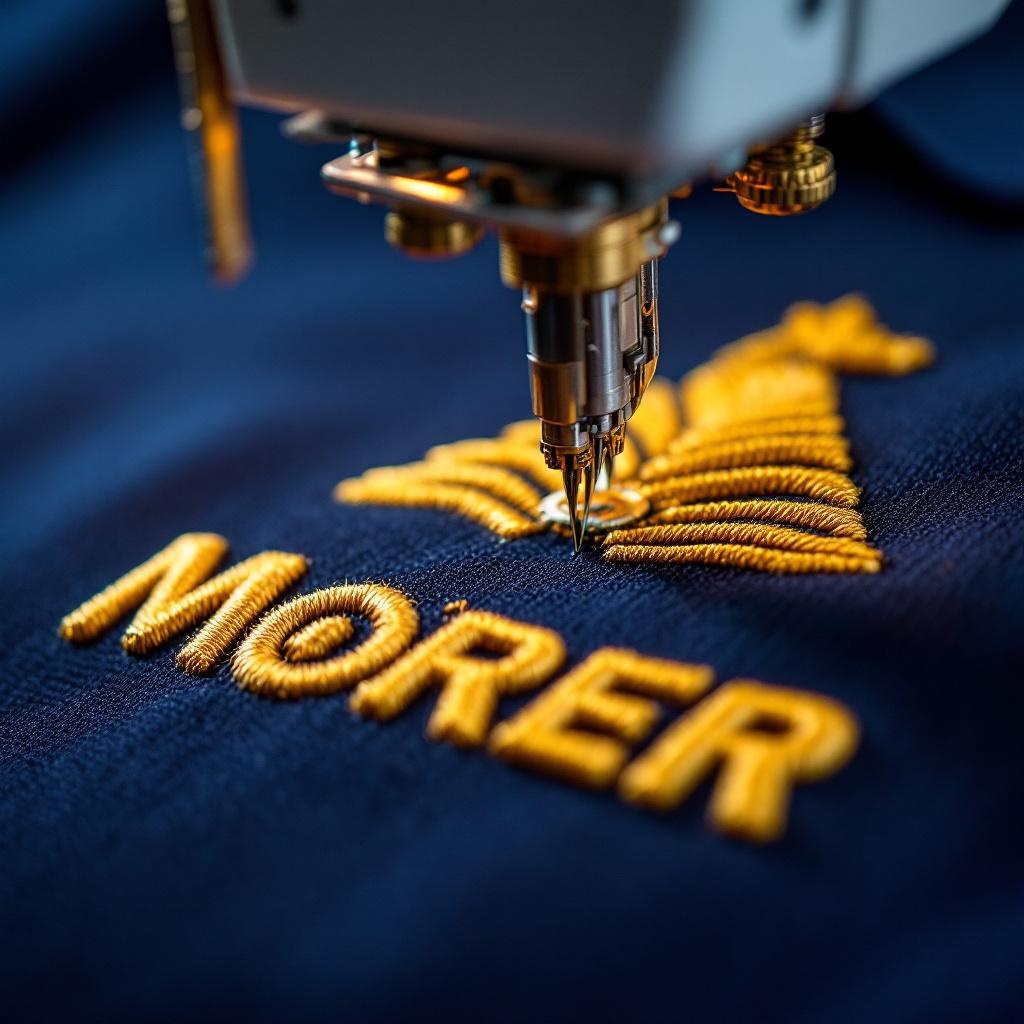
Screen printing wins on t-shirts and high-volume orders; embroidery wins on polos, hats, outerwear, and anything you want to look premium. The right answer isn't one method — it's choosing per garment based on durability, surface type, and order quantity. Screen printing pushes ink onto flat knit fabrics and gets cheaper at volume; embroidery stitches thread into the garment and outlasts almost everything.
The details matter when you're spending serious money to outfit a crew, so here's the full breakdown of where each method belongs. If you want the pricing side first, see how much it costs to embroider a shirt and the realistic minimum order quantities for each method.
1. What Screen Printing Is Best For
Screen printing pushes ink through a fine mesh screen directly onto the garment, one color at a time. Each color needs its own screen, which is why setup costs are higher on small orders and lower per-piece on large ones.
It's the right choice when:
- You're running volume (24 pieces and up, ideal at 50+).
- The garment is a t-shirt, long sleeve, hoodie, or similar flat knit.
- Your logo has bold, clean lines — not fine detail.
- You want the decoration to sit flat and breathe (important in Vegas heat).
- You're printing large — full back, full front, sleeve hits.
Key takeaway
Screen printing is your volume method. Once you're past setup, the cost per piece drops fast. For a 200-count tee order, screen printing often comes in 40-50% cheaper per piece than embroidery.
2. What Embroidery Is Best For
Embroidery stitches your logo into the fabric with thread. It's tactile, dimensional, and reads as premium at a glance. The setup work happens during "digitizing" — converting your logo into a stitch file that the machine can run.
It's the right choice when:
- The garment is a polo, button-down, hat, fleece, softshell, or insulated jacket.
- You want small-format decoration (left chest, hat front, sleeve).
- The garment needs to look professional in a client-facing context.
- You need maximum durability — embroidery outlasts almost everything.
- You're ordering lower quantities (6-48 pieces) where screen print setup makes no sense.
3. Durability Comparison
This is where most contractors get surprised. A quality plastisol screen print on a 60/40 blend tee will survive 40-50 industrial washes before noticeable fade or cracking. A water-based discharge print fades faster but feels softer. Both are reasonable — but neither lasts like embroidery.
Embroidered decoration, on good polyester or poly-blend thread, will typically outlast the garment it's stitched into. The failure mode isn't thread degradation — it's the jacket fabric wearing out around the embroidery. On a quality softshell that's five years or more.
What kills each method
- Screen print killers: high-heat dryers, harsh detergents, repeated bleach exposure, abrasion from safety vests rubbing the chest print.
- Embroidery killers: snagging thread on equipment or fencing, and picking at loose stitches (which then unravel).
4. Cost Comparison
Nobody wants a price list without context, so here's roughly how the economics play out for a typical logo on typical gear:
- Screen printing setup: a per-color setup fee, one-time. Digital proof included.
- Screen printing per piece (2-color on tee): a per-piece fee decorated on top of the garment cost.
- Embroidery digitizing: a one-time fee per logo, kept on file forever.
- Embroidery per piece (left chest, up to 8,000 stitches): a per-piece fee decorated on top of the garment cost.
At 24 pieces the gap narrows. At large orders screen printing is substantially cheaper. At 6 pieces embroidery is actually cheaper because you avoid the screen setup. Under about 12-18 pieces, embroidery almost always wins on total cost.
5. When to Use Each by Garment Type
This is the cheat sheet we use with our contractor clients. It's not a rule — just the answer that's right about 90% of the time:
| Garment | Best Method | Why |
|---|---|---|
| T-shirts & long sleeves | Screen print | Flat, breathable, cost-effective at volume |
| Hi-vis safety tees | Screen print | Preserves moisture-wicking, meets ANSI contrast |
| Polos | Embroidery | Premium look for client-facing staff |
| Hats & caps | Embroidery | Curved surface, small format, high durability |
| Softshells & jackets | Embroidery | Outlasts the garment, weather-resistant |
| Hoodies (bold art) | Screen print | Large format full-front or full-back designs |
| Hoodies (logo only) | Embroidery | Premium hand-feel, longer life |
| Button-downs | Embroidery | Screen print doesn't work well on woven shirts |
| Safety vests | Heat transfer | ANSI compliance; screen ink can fail cert |
Pro tip
Never embroider on a lightweight moisture-wicking tee. The needle perforates the fabric and creates a stiff patch that pulls sweat in the wrong direction. Screen print every time for field-wear tees.
6. The Hybrid Approach
Most of our contractor accounts use both methods — they just run them through different product lines. Field employees get screen-printed tees and hoodies. Office staff, PMs, and sales get embroidered polos and softshells. The brand stays consistent because the logo file is the same; only the decoration method changes to suit the garment.
If you're setting up a branded company store, we'll typically stock both versions of every core product — one screen-printed, one embroidered — so employees can pick the right option for their role without thinking about it.
7. FR Fabric and ANSI Hi-Vis: Special Rules
Construction and trade crews carry a third constraint most office apparel never deals with: compliance. If a garment is rated FR (flame-resistant, NFPA 2112 / 70E) or ANSI/ISEA 107 hi-vis, the decoration method isn't just a style choice — it can void the rating if done wrong.
- FR shirts: only FR-rated thread and FR-compatible inks can go on a flame-resistant garment. Standard polyester embroidery thread or plastisol ink can melt or accelerate burn — that's a real safety failure, not a cosmetic one. We stock NFPA-compliant thread for FR embroidery jobs and verify ink chemistry before any FR screen print run.
- ANSI hi-vis vests and tees: ANSI/ISEA 107 sets minimum background and retroreflective material coverage by class (Class 2 or Class 3 for most road and jobsite work). Decoration can't cover or interrupt the reflective striping, and large prints can push total background coverage below the certified threshold. We map every logo placement against the ANSI grid before production so the finished piece still meets class.
- Decoration method on compliance gear: heat transfer is often the safer call on ANSI vests because it sits cleanly between reflective bands without the needle perforation embroidery requires or the ink saturation a large screen print needs. On FR shirts, small-format embroidery (left chest) with FR thread is standard; large-format screen print runs need an FR-rated ink system, not a standard plastisol set up.
The takeaway for a Las Vegas trade or construction buyer: don't treat your compliance gear the same as your office polos. Tell us upfront which pieces are FR or ANSI-rated and we'll route them through the right decoration process — not just the cheapest or fastest one. Get the full picture in our NFPA 70E embroidery guide.
Not sure which method fits your gear?
Send us your logo and garment list. We'll recommend the right decoration for each piece.
Talk to Our TeamThe Short Version
Don't pick a decoration method. Pick a method per garment. Screen print your tees and your bold hoodie art. Embroider your polos, hats, softshells, and anything a client or superintendent is going to see up close. Use a hybrid program to keep costs reasonable and the brand consistent.
If you want a second opinion on a specific garment, our services page covers what we produce locally, or just reach out and we'll run the numbers on your logo and your list.
Frequently Asked Questions
Is screen printing or embroidery better for construction apparel?
Neither is universally better — it depends on the garment. Screen printing is best for t-shirts, long sleeves, hi-vis tees, and hoodies with bold art, especially at volume (24+ pieces). Embroidery is best for polos, hats, softshells, jackets, and button-downs, and on anything client-facing. Most construction crews run a hybrid program: screen print field tees, embroider polos and outerwear.
Is embroidery or screen printing more durable?
Embroidery is more durable. A quality plastisol screen print on a 60/40 blend tee survives 40-50 industrial washes before noticeable fade or cracking. Embroidered decoration on quality outerwear typically outlasts the garment itself — the fabric wears out before the stitching does.
Is screen printing or embroidery cheaper?
It depends on quantity. Screen printing has higher per-color setup costs that amortize at volume, so it is substantially cheaper per piece on large orders. Embroidery has a one-time digitizing fee but lower minimums, so under about 12-18 pieces embroidery often wins on total cost.
Can you embroider a moisture-wicking t-shirt?
It is not recommended. The embroidery needle perforates lightweight moisture-wicking fabric and creates a stiff patch that interferes with the fabric pulling sweat away. Screen printing is the right method for field-wear performance tees.
Bighorn Threads Team
Screen printing and embroidery for Las Vegas trades. We produce for general contractors, subs, and every trade on the strip. See who we work with.