
What Is Screen Printing? How It Works, Where It Wins, Where It Doesn't
A working buyer's guide to the most common decoration method for t-shirts and crew apparel — what it is, when it wins, and what it costs to run.
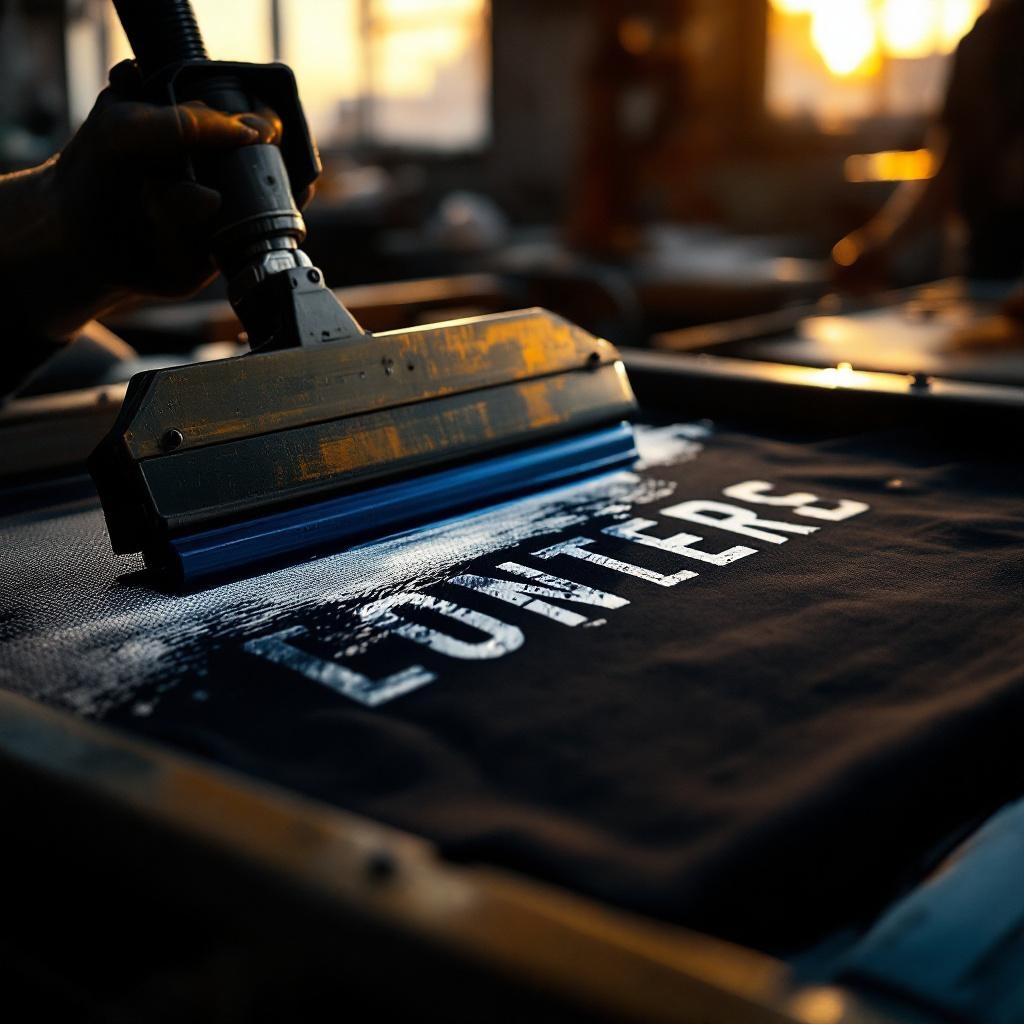
How Screen Printing Actually Works
The process has been around for decades but the underlying mechanics haven't changed much. Silk screen printing, as it's traditionally called, has six stages:
- Color separation. The design is broken into separate layers, one per ink color.
- Screen burning. Each color layer is exposed onto a fine mesh screen coated in light-sensitive emulsion. Where the design blocks the light, the emulsion stays soft and washes out — leaving open mesh that ink can pass through.
- Press setup. Screens are mounted on a manual or automatic press. The garment is loaded onto a platen aligned under the screens.
- Ink + squeegee pass. Ink is flooded across the screen, then pulled through the open mesh with a squeegee onto the garment. One pass per color.
- Layer registration. For multi-color designs, the garment passes under each screen in sequence — registration marks ensure colors line up exactly.
- Cure. The printed garment passes through a heat tunnel at ~320°F (160°C). The ink chemically bonds to the fabric and becomes washable.
For deeper background see our piece on plastisol vs water-based ink, which covers the two main ink families and which one fits which use case.
When Screen Printing Wins
Screen printing is the right call for:
- Larger identical runs. Quantity can affect pricing, subject to the current setup and quote.
- Large designs. Full-back prints, oversized chest logos, anything that wouldn't fit cleanly in embroidery.
- Bold, flat designs. Block letters, simple shapes, high-contrast logos.
- Cotton and cotton-blend tees and hoodies. The fabric the process was built for.
- Field crew apparel. Construction, landscaping, event staff — anywhere the durability matters more than the premium feel.
When Embroidery Wins Instead
Pick embroidery over screen printing for:
- Polos, button-downs, hats, jackets. The premium feel of stitched thread reads "established business," not "team event."
- Smaller batches. Compare current embroidery and printing setup, minimums, and total quoted cost.
- Performance fabrics. Polyester polos take embroidery cleanly without dye-migration concerns.
- Multi-color logos with fine detail. Embroidery handles fine lines and small text better than screen printing on knit fabrics.
Most companies run both — embroidered polos for client-facing roles, screen-printed tees for the field crew.
What Drives Screen Printing Cost
Three factors:
- Setup per color. Each color is a separate screen burn + press setup, charged per color. A 4-color design has 4x the setup of a 1-color design.
- Garment cost. A blank Carhartt K87 wholesale is very different from a Gildan 2000.
- Quantity. Per-piece printing falls dramatically with volume. 24 pieces vs. 200 pieces vs. 500 pieces gives radically different per-piece pricing because setup is fixed.
For a tighter look at pricing, see how embroidery pricing works — the same five factors apply with different weightings.
Fabric Compatibility
Screen-print compatibility depends on the exact garment, fabric, coating, ink system, preparation, cure, artwork, and production partner. Product categories to review include:
- 100% cotton tees. The classic substrate. Crisp prints, full color saturation, fast cure.
- 50/50 cotton-poly. Slightly different ink pickup but identical results in practice.
- 100% polyester. The production partner must confirm the compatible ink system, preparation, cure, and dye-migration controls.
- Tri-blends. Cotton/poly/rayon — softer hand, prints fine but fabric texture means slight ink absorption variation.
- Hi-vis poly mesh. Print placement is constrained by the ANSI 107 retroreflective area limits, but the fabric prints cleanly.
How Long Does It Last
Print service life depends on the ink, garment, preparation, cure, use, laundering, and care. Follow the written instructions for the approved product and decoration.
Ask the production partner how it verifies the approved ink manufacturer's cure requirements for the exact system.
Need screen printed shirts in Las Vegas?
Bighorn Threads coordinates commercial screen printing through selected production partners. Send your design, product, quantity, and deadline for a current quote.
See Our Screen Printing Service →