
FR Shirt Compliance for Vegas Electricians: NFPA 70E Without the Headache
How hazard assessment drives apparel selection, what to consider in Vegas heat, and how to verify decoration, care, and inspection requirements.
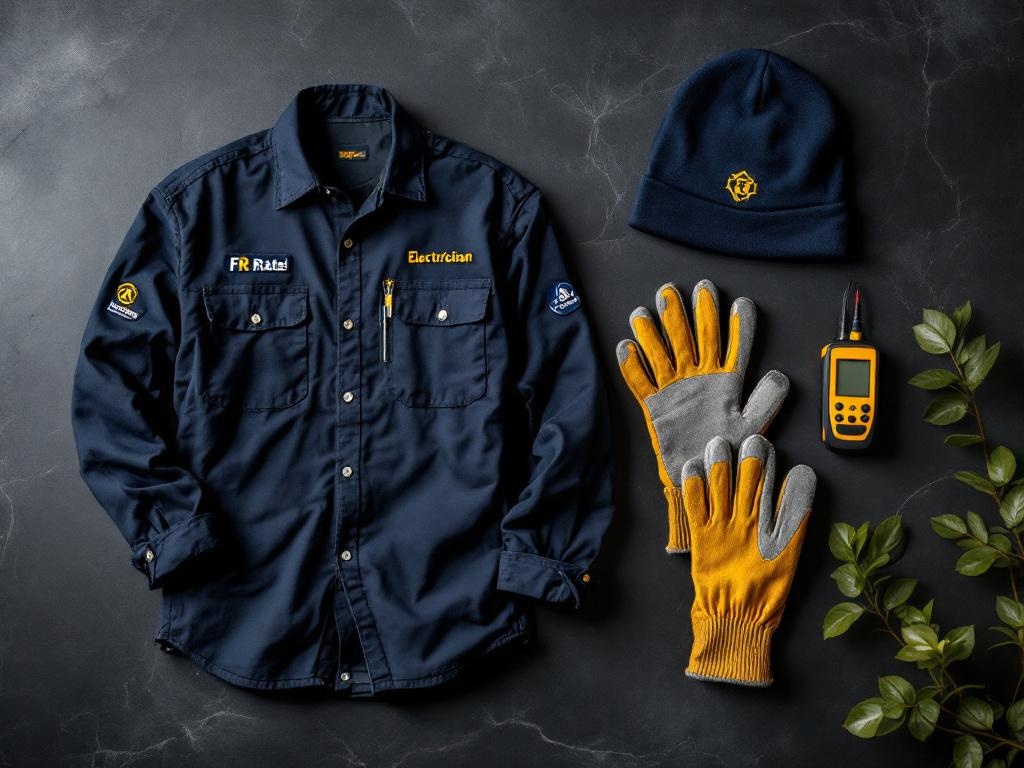
Protective apparel decisions can fail when the garment is selected before the hazard is assessed, decoration requirements are not verified, or heat and fit make the chosen system impractical to wear. Treat apparel as one part of the employer's electrical-safety program, not as a standalone compliance checkbox.
This article is not a substitute for NFPA 70E, OSHA requirements, a qualified safety professional, or the garment manufacturer's instructions. Bighorn Threads coordinates approved decoration through production partners. The employer and its safety team remain responsible for hazard assessment and PPE selection.
1. What NFPA 70E Actually Covers
NFPA 70E addresses electrical safety in the workplace, including work practices, risk assessment, and PPE for electrical hazards. Employers should use the current edition alongside applicable OSHA requirements and their own documented electrical-safety program.
The required PPE cannot be inferred from a trade, equipment name, or voltage alone. A qualified person must evaluate the specific task and equipment conditions using the method adopted by the employer's safety program.
Arc-rated and flame-resistant are not interchangeable specifications. Review the exact product label and current technical data. The employer must select the complete system required by its task-specific assessment.
2. CAT 1 vs CAT 2 vs CAT 4 — What Your Crew Actually Needs
NFPA 70E provides methods for selecting arc-flash PPE. Employers must apply the appropriate method consistently and select a complete system whose arc rating meets the assessed exposure. The category summaries below are reference points, not job assignments.
CAT 1 (4 cal/cm² minimum)
Category 1 corresponds to a minimum arc rating of 4 cal/cm² when the PPE-category method applies. The complete clothing and PPE requirements must come from the current standard and the employer's assessment.
CAT 2 (8 cal/cm² minimum)
Category 2 corresponds to a minimum arc rating of 8 cal/cm² when the PPE-category method applies. Do not assume that fabric weight, a particular layer combination, or commercial work automatically meets this requirement; verify the rating of the complete system.
CAT 3 and CAT 4 (25 cal/cm² and 40 cal/cm²)
Categories 3 and 4 correspond to higher minimum arc ratings when the PPE-category method applies. These systems require specialized selection by the employer's qualified safety team.
Practical answer
Start with the task-specific assessment, not a default shirt category. Once the required protection is documented, compare complete rated systems for heat burden, fit, mobility, care, availability, and compatibility with the rest of the PPE.
3. Comparing Current Garment Options
Heat burden, fit, mobility, care, and availability matter after the required protection is established. Compare only currently rated garments that fit the employer's complete PPE system.
Bulwark FR
Bulwark offers multiple arc-rated garments used in electrical work. Confirm the exact model's current label, arc rating, care instructions, and compatibility with the employer's required PPE system rather than relying on a brand or fabric weight alone.
Carhartt FR
Carhartt offers arc-rated workwear in several fits and fabrics. Verify the current product label and technical data for the exact SKU, then evaluate comfort and fit with the complete required PPE. See our custom Carhartt page for available options.
Wrangler Riggs FR
Wrangler offers arc-rated workwear with traditional work-shirt styling. Confirm the rating and instructions for the exact garment before including it in a PPE program.
4. Embroidery Without Voiding the Rating
Decoration can affect protective apparel and must be evaluated as a complete system. Follow the exact garment manufacturer's current written instructions for thread, backing, placement, size, patches, inks, and any other added material. When the instructions are unclear, obtain written guidance before decorating.
FR-compatible thread
Some manufacturers or safety programs specify aramid or other compatible materials for particular garments. Thread alone does not establish that a decorated garment remains compliant. Bighorn asks the selected production partner to follow the authorized specification for the exact garment and application.
Placement rules
Placement and size limits vary by manufacturer, garment, and decoration method. Bighorn coordinates a review of the current instructions with the selected partner. The employer must approve the proposed decoration before production.
Screen printing on FR
Screen printing may be permitted for some protective garments and prohibited or restricted for others. Ink chemistry, coverage, placement, and curing all require manufacturer review. Do not assume embroidery and printing provide equivalent compliance.
Why this matters
Unsupported decoration can create an avoidable gap in a PPE program. Keep the garment manufacturer's written decoration guidance and the decorator's production specifications with the employer's PPE records.
5. Five Risks to Review
1. Buying FR shirts but skipping FR pants
A shirt's rating does not establish the protection of the complete outfit. Select every clothing layer and PPE component according to the hazard assessment, current standard, and employer's safety program.
2. Layering a non-FR cotton tee under an FR shirt
Do not improvise underlayers. Follow the current standard, employer's program, and garment-system instructions for permissible materials and layering; the rating of one outer garment does not automatically rate the combination.
3. Treating the rating as permanent
Protective garments require regular inspection and must be cared for and retired according to the exact manufacturer's instructions. There is no universal replacement interval or wash count. Remove contaminated, damaged, altered, or illegibly labeled garments from service when required by the manufacturer or employer's program.
4. Using consumer detergent
Use only the laundering products, temperatures, processes, and repair methods permitted on the garment's care label and in the manufacturer's current instructions. If a commercial laundry is used, verify that its process is appropriate for the exact protective garments.
5. Embroidering with standard polyester thread
Ask the decorator to identify the complete decoration specification, not just the thread. The shop should be able to show how its materials, placement, backing, and process follow the exact garment manufacturer's written guidance.
6. What to Actually Buy
After the employer documents the required PPE system, the following inventory questions can help with ordering. These quantities and categories are operational examples, not a safety specification:
- Enough approved shirts and pants for the employer's work and laundering schedule
- Approved layers for the expected weather and required PPE system
- Visibility garments selected for the job's applicable requirements and compatibility with arc-flash PPE
- Documented decoration that follows the exact garment manufacturer's current instructions
- Inspection and replacement inventory so damaged or contaminated garments can be removed promptly
For more planning guidance, see our electrical contractors page. A proposed company store may present approved products and ordering rules. Availability, approvals, payment, delivery, and fulfillment depend on the written setup.
Want a quote on FR for your crew?
Send the employer-approved specification, roster, product requirements, and deadline for a current quote.
Get a QuoteThe Short Version
Start with the employer's task-specific hazard assessment. Select a complete PPE system that meets it, verify the exact garment and decoration instructions, and follow the manufacturer's care, inspection, and retirement criteria.
Apparel is only one part of electrical safety. Qualified work practices, equipment condition, boundaries, training, and the employer's full safety program remain essential.
Bighorn Threads Team
Bighorn coordinates protective-garment decoration through selected production partners. The employer and manufacturer control the approved requirements. See electrical crew planning options.